
In this story
Growing with Yingbo
At 17, he was playing in China’s fourth tier. At 21, he was a Chinese Super League champion and its Young Player of the Year. Mao Weijie’s development has kept pace with Dalian Yingbo’s remarkable climb.
From Dalian Duxing to Dalian Zhixing and then Dalian Yingbo, he has lived through all three names and three successive promotions. He is now the only player in the current squad to have stayed with the club throughout its journey from the fourth tier to the CSL. Supporters call him their “crown prince”, a nickname rooted in those years of growing together.
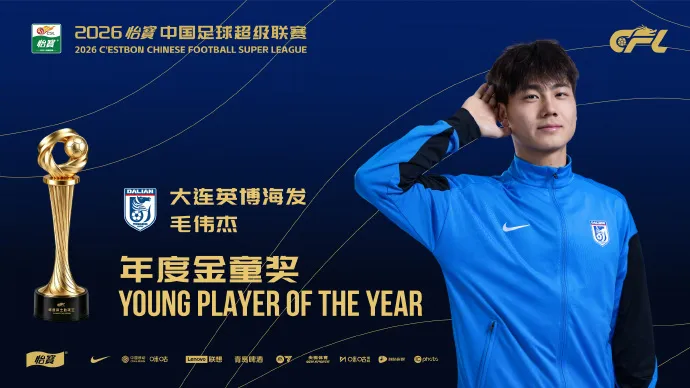
In 2026, he added a remarkable set of achievements: Yingbo’s first CSL title after overturning a deficit that had reached 18 points; the Young Player of the Year award ahead of Wang Yudong and Yang Xi; a U23 Asian Cup silver medal and Asian Games bronze with China; and his first senior national-team call-up. The teenager promoted to the first team four years earlier had reached a much bigger stage.
There were also spells out of the team and questions about his performances. Some of the most revealing parts of Mao’s development lie within those setbacks.
Dalian Duxing was founded in late 2021 and acquired the youth team Mao belonged to. When the club assembled a senior side to enter the fourth-tier Champions League, those youngsters formed the basis of its development squad. In 2022, head coach Li Guoxu promoted 17-year-old Mao from the reserves, giving him an early introduction to senior football.
The club climbed one level in each of the next three seasons: promotion to League Two in 2022, League One in 2023 and the CSL in 2024. As the demands changed, Mao gradually developed a recognisable game of his own.
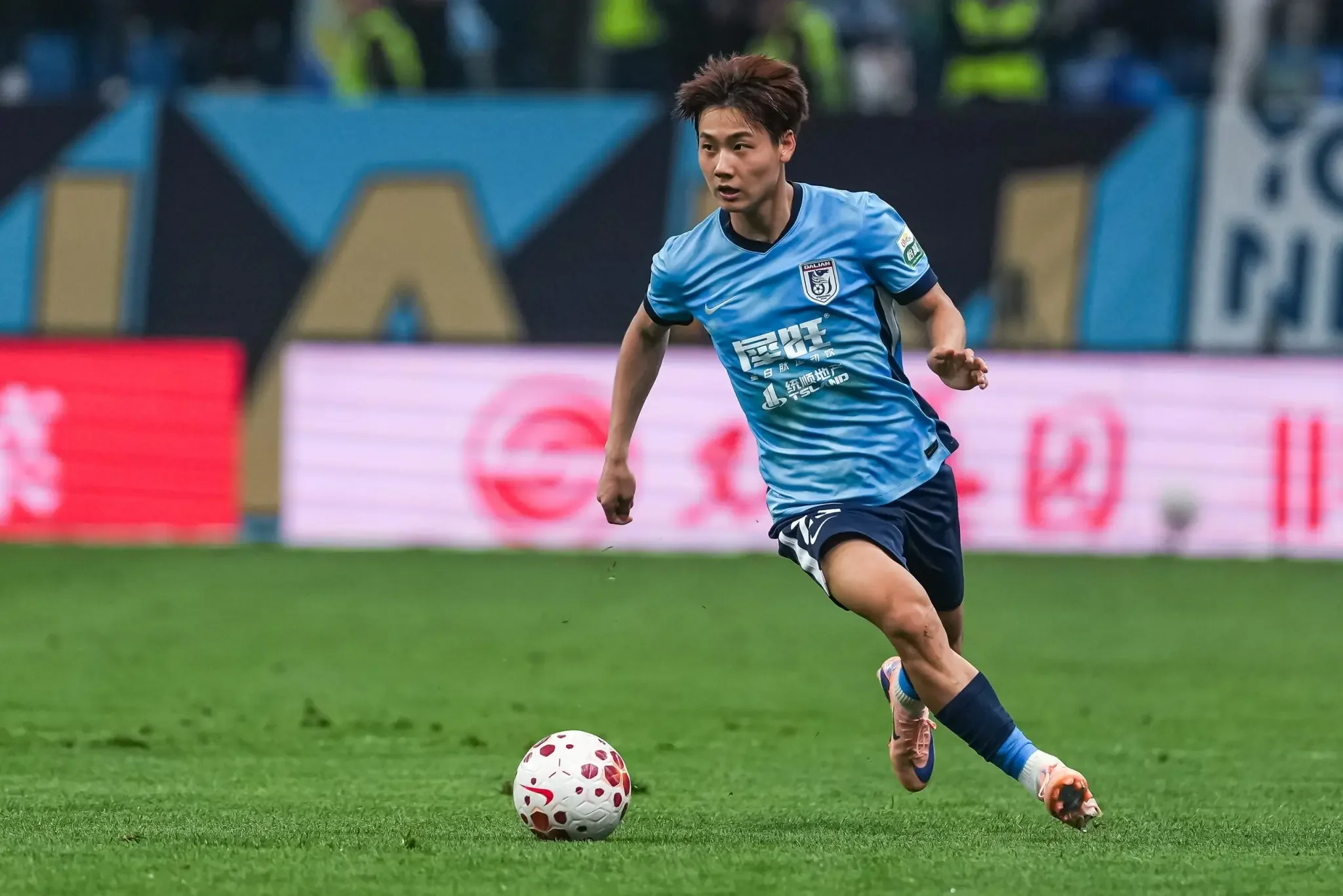
Early on, he played mainly as an attacking midfielder, often drifting in from a flank to receive between the opposition’s midfield and defence. In those tight, pressured spaces, scanning before the pass, the first touch and the next decision can determine whether an attack survives.
By 2024, his technical qualities were clear: moving quickly from controlling a dropping ball into the next action, escaping pressure with close changes of direction, and shielding possession before turning or laying it off. He sought passing options in the half-spaces and around the penalty area, offering teammates someone who could hold the ball in advanced positions.
As stylistic comparisons, there are traces of Bernardo Silva and Jack Grealish: the willingness to receive in tight spaces, protect possession with the body, escape through pauses, turns and changes of tempo, then connect with teammates. That is the quality behind hopes of a Chinese Bernardo or Grealish: a technical player who can bring composure to difficult situations.
Reading the moments between possessions
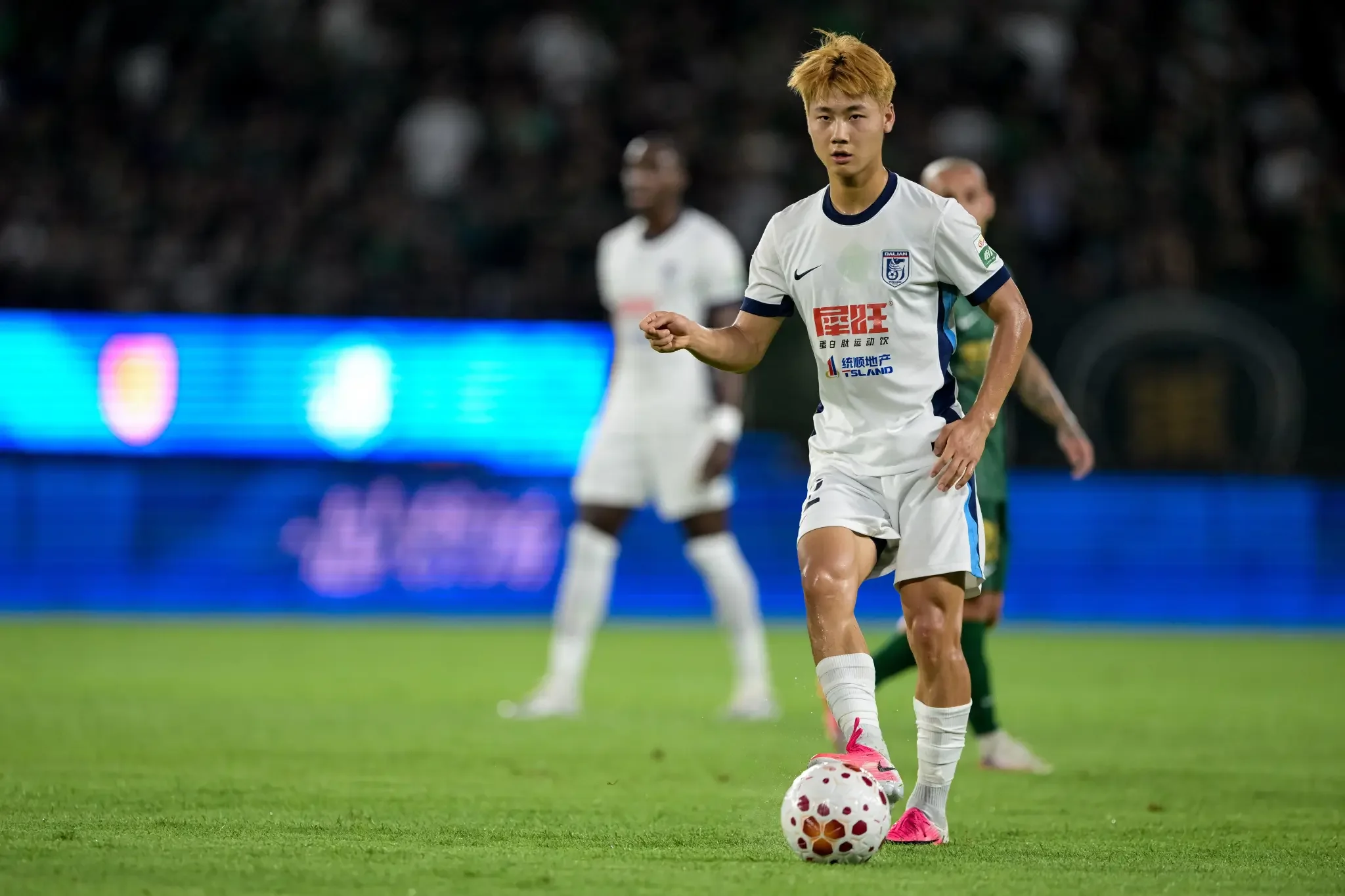
Another quality would later help him change positions: his defensive commitment and anticipation of second balls.
After an aerial challenge, block or clearance, where the ball falls often shapes the next transition. Mao scans early and moves towards the likely landing point to recover possession. He competes across different areas and continues tracking back and covering for teammates late in games.
These habits became clearer at the U20 Asian Cup. When a teammate pressed out wide, he moved centrally to protect the space. Before pressing a passer, he checked the receiving options behind him. Once possession was recovered, he could join the next wave of attack. If a forward run did not create a passing option, he dropped back to offer the ball carrier an outlet.
Those details extend his value beyond a dribbling highlights reel. He can contribute throughout the sequence from winning possession to building the next attack, showing a midfielder’s growing understanding of space and tempo.
The test of a first CSL season
The CSL soon brought a new test.
In Yingbo’s first CSL season in 2025, Mao played more often on the right of midfield, sometimes drifting into the right-sided central areas. Against quicker defensive organisation and stronger physical challenges, familiar solutions from the lower divisions had to be executed faster. His performances did not sustain the earlier upward momentum, and his playing opportunities fluctuated.
For a young technical player, there is a distance between having a little of everything and reliably fulfilling a position’s demands. Wide players must keep threatening forward. Central players face denser pressure. Organisers must distribute consistently. Mao’s difficult adjustment raised a question: which role would allow his strengths to show most consistently?
A breakthrough from left-back
In 2026, the first answer came at left-back.
After defeats in the opening two rounds, Li Guoxu changed his selection for round three against Shanghai Port, moving Mao to left-back. A decision made to address a squad problem became an important turn in his career.
There was a clear tactical logic. Frank Acheampong preferred to stay close to the touchline on the left and needed support behind him. Starting at left-back, Mao could move inside during attacks, receiving in deeper or more advanced midfield areas. He knew Li’s requirements in and out of possession and had the technique to make those movements work.
Moving deeper gave Mao a different view of the pitch and more room to start his runs. He could come towards the ball and carry it forward, combine with a winger and midfielder, or accelerate into gaps before the opposition settled after a turnover. His shielding, turning and close combinations found a useful new starting point.
Against Port, he pressed and progressed the ball repeatedly on the left while contributing actively in defence. Yingbo earned their first win of the season, and Mao earned his way back into the side. He gradually secured a regular starting place and received his first senior China call-up around the halfway point of the league season.
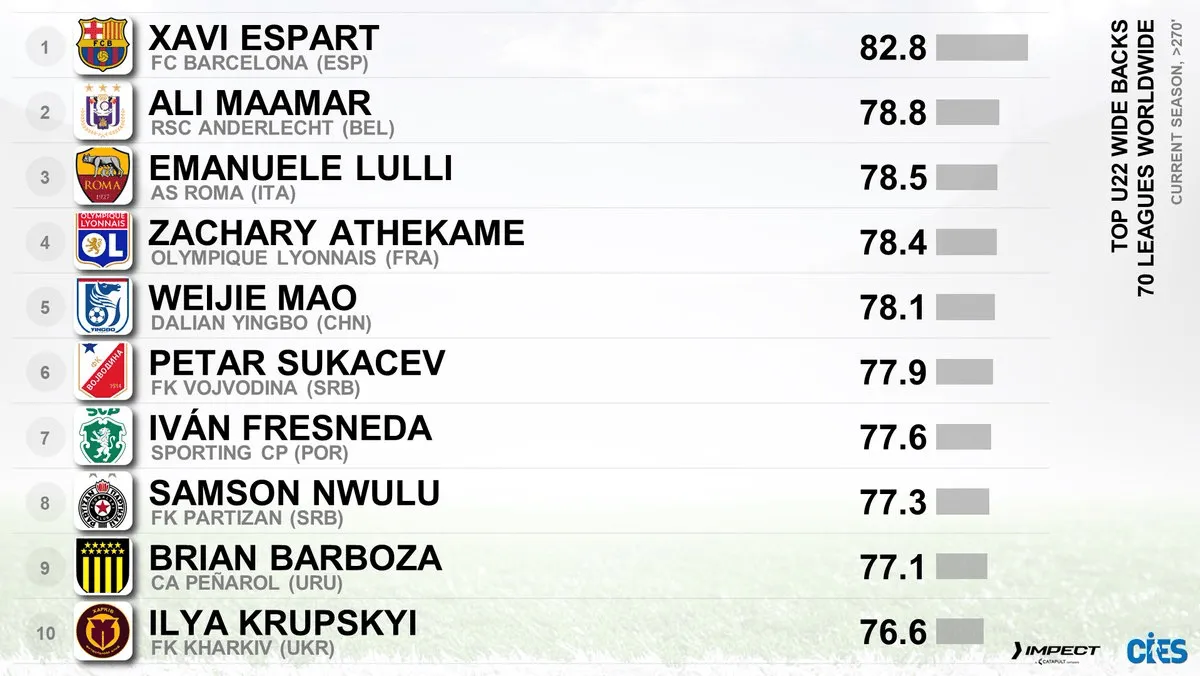
A CIES ranking during the season offered a striking measure of that breakthrough.
A champion and Young Player of the Year
In the U22 wide-back performance ranking, covering 70 leagues worldwide and players with more than 270 minutes in the current season, Mao placed fifth with 78.1. Comparing him with young full-backs across different leagues brought wider attention to the player from Dalian.
From waiting for an opportunity at the start of the season to becoming an important member of a championship side, Mao had made a significant step. Yingbo overturned a gap that had reached 18 points to win the CSL. The player who had stayed with them since the fourth tier also finished the season as Young Player of the Year.
The next position, the next step
The award recognised his progress. There are still clear directions for further development.
Even at left-back, many of Mao’s attacking habits remain those of a midfielder: receiving in the half-spaces, helping organise possession and influencing the game through carries and passes. His left-footed crossing, decisions after overlapping and choices between attacking routes all have room to improve.
Ball progression, ground coverage and exploiting space are established strengths. Crossing, the final pass, technical consistency under intense pressure, defensive positioning and covering decisions need more work. Turning agility and anticipation into reliable defending, and continuing to create against compact opposition, will shape his next step.
That keeps the question of his eventual position an intriguing one.
His own preference is to develop at full-back or as a number eight, while respecting his coach’s decisions. The receiving, progression, combination play and transitions required of a number eight fit qualities that have emerged over these years.
Li Guoxu sees an even wider range: Mao can be tried across the pitch apart from centre-back and centre-forward, and left-back will not be his final position. That judgement comes from years of coaching him. Playing full-back is adding defensive understanding, a sense of distances and experience of an entire flank. Those lessons could also support a future return to midfield.
From his first-team promotion at 17 to a title and individual award at 21, Mao has kept moving forward with this club. Duxing, Zhixing, Yingbo: three names for the same climb. Attacking midfielder, wide midfielder, left-back: different stages in a young player’s search for where he can contribute most.
Dalian supporters have watched him travel from the fourth tier to the CSL. Now they hope he can build on this breakthrough, developing a clearer and more mature game against increasingly demanding opposition.
Share this story
READ NEXT
Five games. Fourteen points.
Once eighteen points behind. Still fourteen adrift with five games left. How Yingbo won five in a row and a first CSL title in the snow at Suoyuwan.
4 min read